















Category: Industry News

7 minutes read
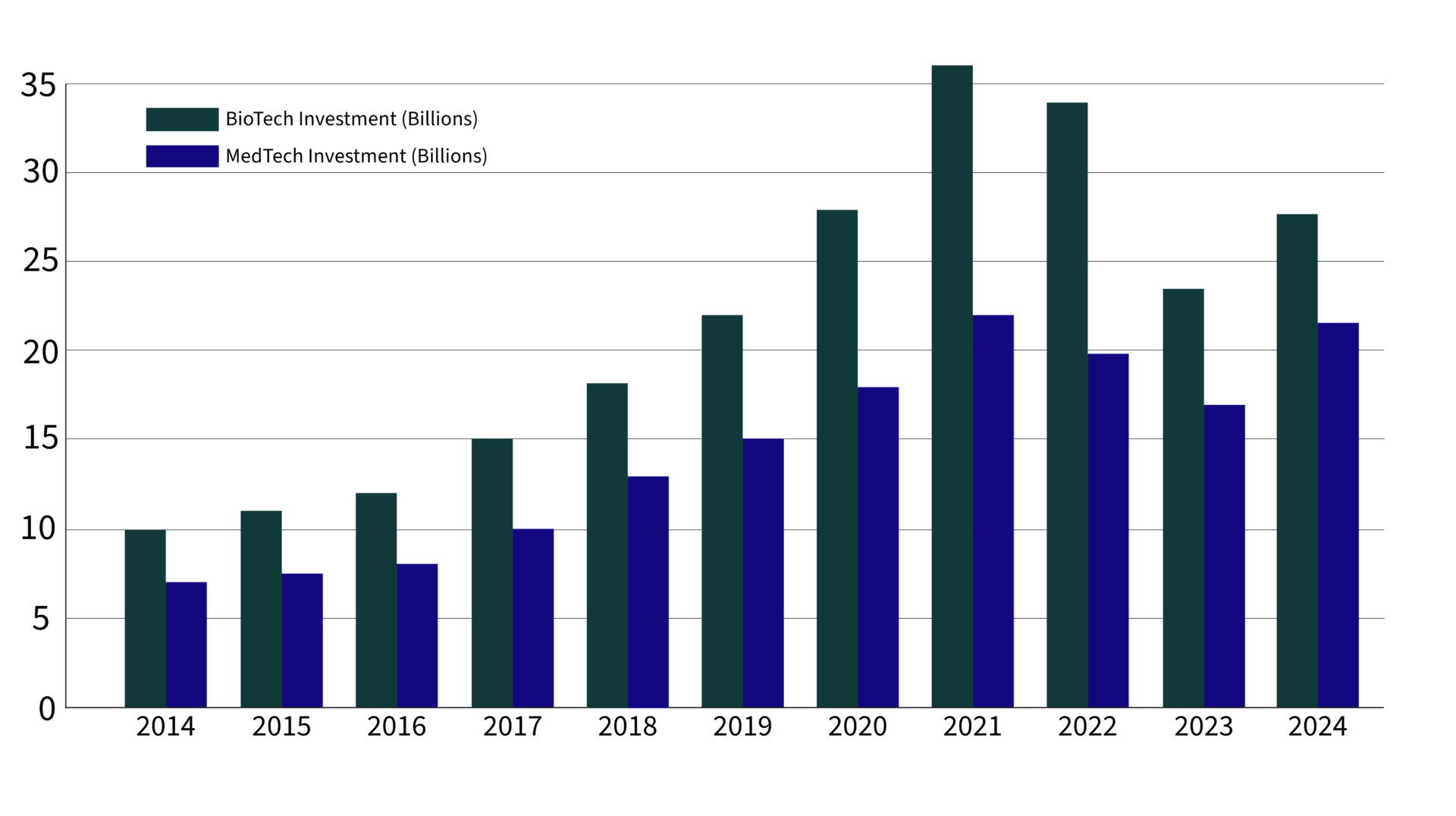
Biopharma and MedTech’s 2024 Investment Resurgence

After two years of cautious investing, venture capital is making a powerful comeback in biopharma and MedTech, signalling a reinvigorated confidence in the potential for healthcare innovation.
According to recent data from JPMorgan’s Q3 2024 report, venture investments in biopharma are poised to hit $27.7 billion this year, while MedTech is projected to see a 30% increase over 2023’s funding, reaching an impressive $21.5 billion.
This influx reflects strategic shifts towards fewer, larger investments and a renewed focus on high-impact, scalable technologies that promise to reshape patient care.
Register to continue reading.
5 minutes read
BRAIN Biotech’s EUR 128.88 Million Deal: A Game-Changer for Biotech

In a move that could redefine its future, BRAIN Biotech AG has secured a landmark royalty monetisation deal worth up to EUR 128.88 million with Royalty Pharma.
This transaction centres on the investigational compound deucrictibant, which is being developed for treating Hereditary Angioedema, a rare and severe genetic disorder. While the financial figures are already impressive, the real excitement stems from what this means for the biotech landscape and BRAIN Biotech’s trajectory.
Why This Deal is So Important
For BRAIN Biotech, this deal is more than just a financial windfall. With an immediate €18.41 million in upfront payments and the potential for more than €110 million tied to regulatory and sales milestones, this agreement enables the company to unlock future revenue without diluting shareholder value. This is a savvy form of non-dilutive financing, allowing BRAIN to benefit from future sales without sacrificing its equity.
A Major Milestone for the BioIncubator
BRAIN’s BioIncubator, which focuses on highly innovative biotechnological projects, is the engine behind this deal. The success of deucrictibant validates years of investment into a pipeline of disruptive biotech solutions. CEO Adriaan Moelker described the deal as a “milestone” in the company’s history, as it will fuel BRAIN’s ambition to become a global leader in industrial enzymes.
Deucrictibant is currently in clinical development by Pharvaris NV, which targets rare diseases like Hereditary Angioedema. The disease is life-threatening, and if the clinical trials succeed, this drug could transform treatment options for thousands of patients worldwide.
The compound’s development through BRAIN’s BioIncubator highlights the company’s knack for identifying and nurturing high-impact, high-reward projects.
Accelerating the Enzyme Market Transformation
Beyond the clinical and financial benefits, the proceeds from this transaction will accelerate BRAIN Biotech’s ongoing transformation into a global powerhouse in the industrial enzyme market. This sector is poised for significant growth, especially in food, beverage, and life sciences applications, where enzymes are critical for innovation.
With the financial resources unlocked through this deal, BRAIN plans to fuel M&A activities, further innovation, and repay short-term loans, positioning itself as a top-ten global player in this highly competitive space. (Source: PharmiWeb)
A Signal to Investors
Perhaps one of the most exciting aspects of this deal is the message it sends to investors. BRAIN Biotech has been working on revitalising its operational structure over the past few years, and this transaction demonstrates that its strategic investments are beginning to pay off.
CFO Michael Schneiders highlighted the deal’s significance, pointing out that the value of the transaction exceeds four times BRAIN’s market capitalisation prior to the deal. This could put BRAIN back on the radar of equity investors looking for innovative, high-growth biotech companies. (Source: PharmiWeb)
Looking Forward
This deal isn’t just about immediate financial gain—it’s a springboard for BRAIN Biotech’s long-term vision. As the company continues to commercialise projects from its BioIncubator, it is well-positioned to become a dominant player in both pharmaceuticals and industrial biotech.
With Royalty Pharma’s backing and a strong pipeline of biotech solutions, BRAIN Biotech is transforming from a niche player into a global innovator.
The excitement around this deal stems from its potential to accelerate innovation, improve patient outcomes, and reshape the biotech and enzyme markets—all while setting BRAIN Biotech up for sustained growth and success.
Drive Growth
In a fast-evolving biotechnology landscape, growth can be driven by various strategies—whether through innovative partnerships, monetising intellectual property, or strategic investments in R&D.
For companies seeking to optimise growth avenues, leveraging advanced tools can make all the difference. Vamstar offers a range of AI-driven solutions designed to streamline key business operations such as price tracking.
With tools like Price Co-Pilot, Vamstar enables lifescience businesses to monitor pricing trends, benchmark against competitors, and adjust in real-time to market dynamics.
These capabilities empower organisations to stay ahead in competitive markets by optimising pricing strategies and enhancing procurement processes.
Having the right strategies and tools in place is critical for unlocking long-term growth, and Vamstar’s AI-powered solutions are ideally suited to support this journey.
Get in touch with us today
Please provide your details and we’ll contact you.




4 minutes read
Dexcom Launches Stelo: A Game-Changer in the Wearables Market

Dexcom has taken a bold step in the wearables market with the launch of Stelo, its first over-the-counter (OTC) continuous glucose monitor (CGM). This device, specifically designed for adults with Type 2 diabetes who do not use insulin and those with pre-diabetes, is set to make advanced glucose monitoring more accessible and affordable than ever before.
The Significance of Stelo in the CGM Market
Stelo represents a significant shift in the CGM landscape, traditionally dominated by prescription-based devices targeting those on insulin therapy. Priced at $89 per month for a subscription or $99 for a single purchase of two sensors (each lasting up to 15 days), Stelo is positioned as a cost-effective alternative in a market where similar products can cost more than $250 per month. This move not only broadens Dexcom’s customer base but also addresses a previously underserved segment of the diabetes population—those managing their condition without insulin.
The Expanding Wearables Market
The wearables market has seen explosive growth in recent years, with global valuations expected to reach $265.4 billion by 2026. Health-focused devices, including CGMs, are a significant driver of this growth. Stelo’s introduction into the OTC market aligns with this trend, offering consumers a powerful tool for real-time glucose monitoring and insights without the need for a prescription.
This market expansion is further fueled by growing consumer interest in health and wellness, pushing companies to innovate and offer products that cater to both specific medical needs and general health monitoring. Stelo’s ability to provide continuous glucose readings and personalized health insights via a smartphone app places it at the forefront of this trend.
Competitive Dynamics and Market Shifts
The launch of Stelo is set to shake up the competitive landscape in the bio-wearables market. Abbott, a major player in this space, is also preparing to release its own OTC CGMs—Libre Rio for Type 2 diabetes management and Lingo for broader health and wellness monitoring. While Abbott’s Lingo is targeted more towards lifestyle management, Stelo is specifically aimed at individuals with Type 2 diabetes and pre-diabetes who are looking to better manage their condition.
Dexcom’s move into the OTC space not only challenges its competitors but also drives innovation in the market. The accessibility and affordability of Stelo may pressure other companies to lower prices or enhance their offerings to stay competitive. This increased competition is likely to benefit consumers through more choices, improved technology, and potentially lower costs.
Conclusion
Dexcom’s introduction of Stelo into the market is a significant milestone in both the CGM and broader wearables markets. By offering an affordable and accessible CGM without the need for a prescription, Dexcom is democratising diabetes management technology and empowering a wider audience to take control of their health. As the wearables market continues to evolve, products like Stelo are expected to play a crucial role in shaping the future of health monitoring, making advanced health management tools more commonplace and accessible to all. This move not only strengthens Dexcom’s market position but also sets the stage for a new era of health-focused wearables.
Comprehensive Support for Strategic Decision-Making
Empower your team with essential tools for informed decisions in dynamic market environments.

Get in touch with us
Please provide your details and we’ll contact you



4 minutes read
Singapore’s Medtech Revolution: Pioneering Healthcare Innovation and Economic Growth

Singapore’s medtech ecosystem has become a powerhouse of innovation and growth, positioning the country as a leading hub for medical technology in the Asia-Pacific region. This success is driven by a combination of government support, strategic investments, and a focus on both healthcare innovation and economic development.
Infrastructure and Ecosystem Development
Singapore has cultivated a robust infrastructure to support medtech innovation, which includes state-of-the-art research facilities, advanced manufacturing capabilities, and a conducive regulatory environment. The country is home to over 60 multinational medtech companies, many of which conduct critical research and development (R&D) and manufacturing operations locally. These companies benefit from Singapore’s position as a global financial center and its growing reputation as a technology hub, especially in fields like artificial intelligence (AI) and data analytics.
Government Initiatives and Public-Private Partnerships
The Singapore government has been instrumental in fostering a dynamic medtech ecosystem through initiatives like the Research, Innovation and Enterprise 2025 (RIE2025) plan, which aims to bolster R&D capabilities, support talent development, and encourage commercialisation efforts. The Medtech Catapult initiative, launched with a funding of S$38 million, is another significant effort to accelerate the development of innovative medtech products and enhance the manufacturing capabilities of local enterprises. This initiative not only provides financial support but also offers access to a network of experts in quality assurance, regulatory affairs, and clinical development.
Public-private partnerships have also been pivotal in driving growth. These collaborations allow startups and small-medium enterprises (SMEs) to leverage the expertise and resources of established players, leading to faster innovation and commercialization. For example, the partnership between local companies and global giants like Alcon has resulted in significant advancements in manufacturing processes and product development.
Focus on Preventive Health and Sustainability
As Singapore’s population ages, the healthcare system faces increasing pressure, making medtech innovations crucial. The country’s healthcare transformation, led by initiatives like Healthier SG, emphasizes preventive care through digital health apps and wearable devices, which empower individuals to monitor and manage their health proactively. Furthermore, smart wards equipped with advanced technologies are helping healthcare professionals manage patient care more efficiently, demonstrating the role of medtech in addressing future healthcare challenges.
Sustainability is also a growing focus within Singapore’s medtech sector. Efforts are being made to design products that are not only innovative but also environmentally sustainable, aligning with the nation’s broader goals of reducing its carbon footprint and achieving net-zero emissions.
Economic Impact and Future Prospects
The medtech sector in Singapore is not just about healthcare; it is also a significant economic driver. The industry has seen substantial growth, with its contribution to manufacturing output increasing dramatically over the past decade. This growth has created thousands of high-tech jobs and attracted substantial foreign investment, further solidifying Singapore’s status as a medtech hub.
As the sector continues to evolve, Singapore is well-positioned to remain at the forefront of medtech innovation, benefiting both its economy and its healthcare system. The country’s comprehensive support system, from early-stage investment to commercialisation, ensures that medtech companies can thrive and contribute to global health advancements.
This strategic combination of innovation, government support, and economic foresight makes Singapore a leading destination for medtech companies looking to expand in the Asia-Pacific region and beyond.
Partner with Us for Future Success
Discover how we can empower your business with innovative AI solutions and drive growth.
Get in touch with us
Please provide your details and we’ll contact you
11 minutes read
The Transformative Power of AI in Pharmaceutical Manufacturing

Artificial Intelligence (AI) is at the forefront of innovation across multiple sectors within the life sciences industry, with pharmaceutical manufacturing being a prime area of impact. The integration of AI into pharmaceutical processes is not just a technological upgrade—it represents a fundamental shift in how drugs are discovered, developed, produced, and delivered.
This digital transformation, powered by AI, is driving significant enhancements in efficiency, cost reduction, and time-to-market, promising a new era of precision and agility in pharmaceutical manufacturing.
AI in Drug Discovery and Development
Traditionally, drug discovery has been an intricate and costly endeavour, with a staggering 90% of drug candidates failing during clinical trials. AI is revolutionising this landscape by enabling the rapid analysis of vast and complex datasets, predicting drug efficacy, and identifying promising candidates with unprecedented accuracy.
A 2020 report by the Tufts Center for the Study of Drug Development estimated the average cost of bringing a new drug to market at approximately $2.6 billion. However, AI-driven platforms like Atomwise and BenevolentAI are dramatically lowering these costs by expediting the identification of viable drug candidates. For example, Atomwise’s AI platform has demonstrated its capability by screening 10 million compounds within days, successfully identifying potential inhibitors for the Ebola virus.
Moreover, AI’s role in personalised medicine is becoming increasingly significant. By analysing patient data, AI algorithms can identify specific biomarkers, allowing for the development of targeted therapies tailored to individual patient profiles. This reduces the traditional trial-and-error approach, improving both patient outcomes and the efficiency of drug development.
AI in Manufacturing Process Optimisation
Pharmaceutical manufacturing is characterised by its complexity and the necessity for strict regulatory compliance. AI, particularly through machine learning (ML) and predictive analytics, is transforming this sector by optimising production processes, minimising waste, and enhancing product quality.
A critical application of AI in manufacturing is the real-time monitoring and control of production lines. Traditional methods, reliant on manual inspections, are time-consuming and susceptible to human error. AI-powered systems, on the other hand, continuously monitor production, detect anomalies, and make instantaneous adjustments to ensure consistent product quality. For instance, GlaxoSmithKline (GSK) reported a 30% increase in vaccine production yields by integrating AI-driven process optimisation.
AI also plays a crucial role in predictive maintenance. By analysing historical data, AI algorithms can forecast equipment failures before they occur, enabling preemptive maintenance that reduces downtime and cuts maintenance costs. This predictive capability ensures that manufacturing operations remain smooth and uninterrupted, significantly enhancing overall efficiency.
Register to continue reading.
