























7 minutes read
Biopharma and MedTech’s 2024 Investment Resurgence
After two years of cautious investing, venture capital is making a powerful comeback in biopharma and MedTech, signalling a reinvigorated confidence in the potential for healthcare innovation.
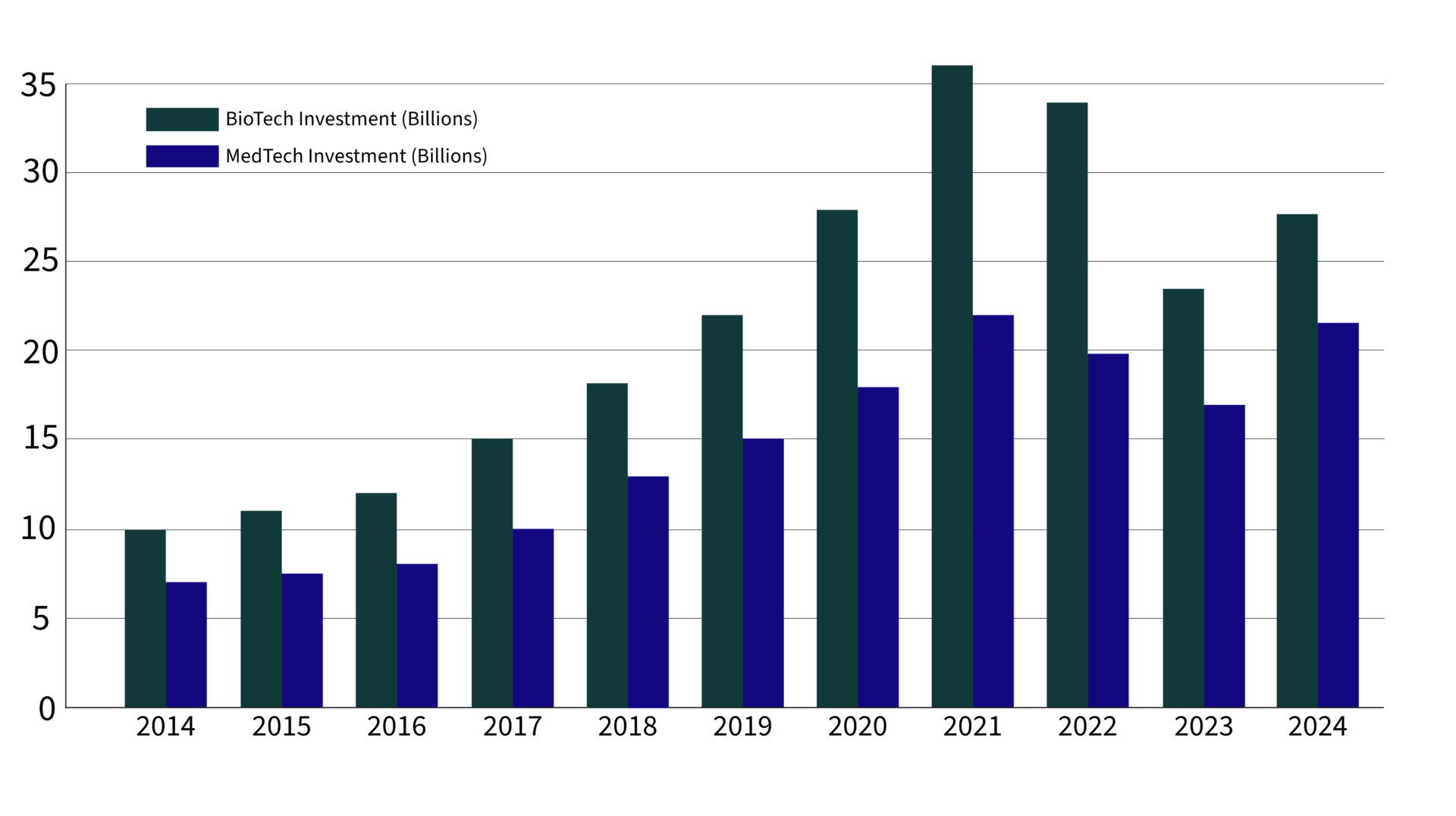
According to recent data from JPMorgan’s Q3 2024 report, venture investments in biopharma are poised to hit $27.7 billion this year, while MedTech is projected to see a 30% increase over 2023’s funding, reaching an impressive $21.5 billion.
This influx reflects strategic shifts towards fewer, larger investments and a renewed focus on high-impact, scalable technologies that promise to reshape patient care.
Key Catalysts Fuelling This Funding Surge
This investment momentum isn’t arbitrary. Several key drivers are attracting investors to re-engage with biopharma and MedTech, each promising disruptive advances and, ultimately, better healthcare outcomes:
- Revolutionary Tech Integration: Advanced technologies like artificial intelligence (AI) and machine learning are not only enhancing diagnostics but are also driving the potential of precision medicine. From predicting disease progression to tailoring individualised treatments, AI is transforming both operational efficiency and clinical accuracy. MedTech startups working with AI and data-driven diagnostics, particularly in wearables and remote monitoring, are drawing significant interest as they expand patient access to precision care.
- Regulatory Flexibility and Speed: A wave of regulatory support is enabling faster pathways to market for novel therapies and devices. Flexible frameworks, such as accelerated approval processes and expanded indications for breakthrough therapies, are allowing startups to bring innovative treatments to market sooner. This environment is a win-win: it encourages investors by reducing the long wait times for ROI and facilitates patients’ access to cutting-edge treatments.
- Demand for Personalisation and Accessibility: Today’s healthcare landscape is increasingly patient-centred, pushing for technologies that prioritise accessibility, affordability, and personalisation. There’s a growing demand for solutions that extend healthcare access through digital and remote channels—like telemedicine and mobile diagnostics—particularly in underserved areas. This shift aligns perfectly with investors’ goals, emphasising scalable solutions that meet real-world needs.
- Shift Towards Larger, Strategic Funding Rounds: Interestingly, while the total number of deals in 2024 has decreased, the average deal size has increased. This trend reflects a shift toward strategic, high-value investments that aim to scale up the most promising startups. In biopharma, fewer but larger deals are enabling focused efforts in groundbreaking areas such as gene therapy, rare disease treatment, and regenerative medicine. For MedTech, the investments, though generally smaller, are consistent, supporting agile startups in diagnostics and telehealth that are better equipped to navigate the rapidly evolving healthcare market.
Register to continue reading.

