















Category: MedTech

7 minutes read
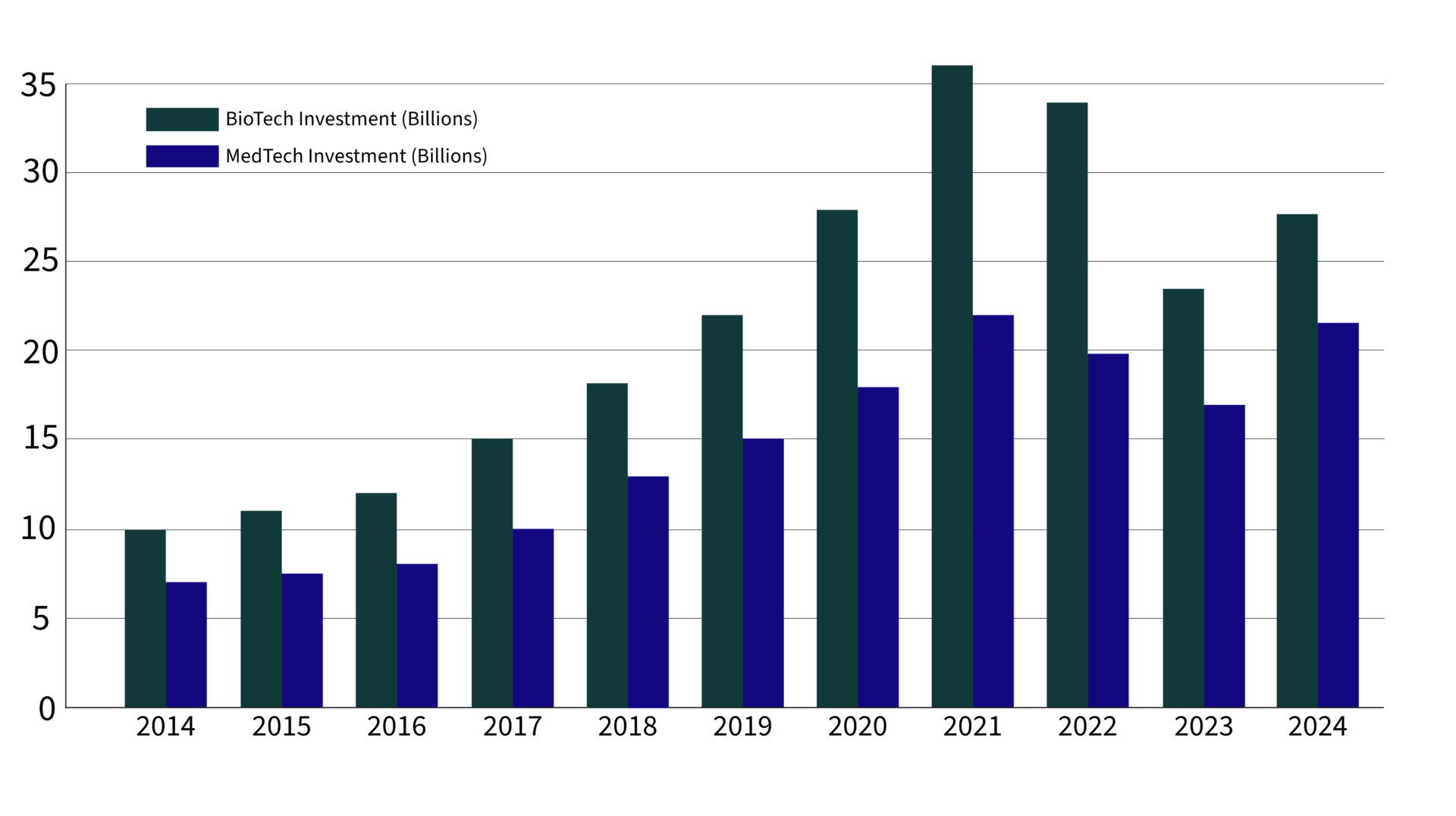
Biopharma and MedTech’s 2024 Investment Resurgence

After two years of cautious investing, venture capital is making a powerful comeback in biopharma and MedTech, signalling a reinvigorated confidence in the potential for healthcare innovation.
According to recent data from JPMorgan’s Q3 2024 report, venture investments in biopharma are poised to hit $27.7 billion this year, while MedTech is projected to see a 30% increase over 2023’s funding, reaching an impressive $21.5 billion.
This influx reflects strategic shifts towards fewer, larger investments and a renewed focus on high-impact, scalable technologies that promise to reshape patient care.
Register to continue reading.

4 minutes read
Dexcom Launches Stelo: A Game-Changer in the Wearables Market

Dexcom has taken a bold step in the wearables market with the launch of Stelo, its first over-the-counter (OTC) continuous glucose monitor (CGM). This device, specifically designed for adults with Type 2 diabetes who do not use insulin and those with pre-diabetes, is set to make advanced glucose monitoring more accessible and affordable than ever before.
The Significance of Stelo in the CGM Market
Stelo represents a significant shift in the CGM landscape, traditionally dominated by prescription-based devices targeting those on insulin therapy. Priced at $89 per month for a subscription or $99 for a single purchase of two sensors (each lasting up to 15 days), Stelo is positioned as a cost-effective alternative in a market where similar products can cost more than $250 per month. This move not only broadens Dexcom’s customer base but also addresses a previously underserved segment of the diabetes population—those managing their condition without insulin.
The Expanding Wearables Market
The wearables market has seen explosive growth in recent years, with global valuations expected to reach $265.4 billion by 2026. Health-focused devices, including CGMs, are a significant driver of this growth. Stelo’s introduction into the OTC market aligns with this trend, offering consumers a powerful tool for real-time glucose monitoring and insights without the need for a prescription.
This market expansion is further fueled by growing consumer interest in health and wellness, pushing companies to innovate and offer products that cater to both specific medical needs and general health monitoring. Stelo’s ability to provide continuous glucose readings and personalized health insights via a smartphone app places it at the forefront of this trend.
Competitive Dynamics and Market Shifts
The launch of Stelo is set to shake up the competitive landscape in the bio-wearables market. Abbott, a major player in this space, is also preparing to release its own OTC CGMs—Libre Rio for Type 2 diabetes management and Lingo for broader health and wellness monitoring. While Abbott’s Lingo is targeted more towards lifestyle management, Stelo is specifically aimed at individuals with Type 2 diabetes and pre-diabetes who are looking to better manage their condition.
Dexcom’s move into the OTC space not only challenges its competitors but also drives innovation in the market. The accessibility and affordability of Stelo may pressure other companies to lower prices or enhance their offerings to stay competitive. This increased competition is likely to benefit consumers through more choices, improved technology, and potentially lower costs.
Conclusion
Dexcom’s introduction of Stelo into the market is a significant milestone in both the CGM and broader wearables markets. By offering an affordable and accessible CGM without the need for a prescription, Dexcom is democratising diabetes management technology and empowering a wider audience to take control of their health. As the wearables market continues to evolve, products like Stelo are expected to play a crucial role in shaping the future of health monitoring, making advanced health management tools more commonplace and accessible to all. This move not only strengthens Dexcom’s market position but also sets the stage for a new era of health-focused wearables.
Comprehensive Support for Strategic Decision-Making
Empower your team with essential tools for informed decisions in dynamic market environments.

Get in touch with us
Please provide your details and we’ll contact you


4 minutes read
Singapore’s Medtech Revolution: Pioneering Healthcare Innovation and Economic Growth

Singapore’s medtech ecosystem has become a powerhouse of innovation and growth, positioning the country as a leading hub for medical technology in the Asia-Pacific region. This success is driven by a combination of government support, strategic investments, and a focus on both healthcare innovation and economic development.
Infrastructure and Ecosystem Development
Singapore has cultivated a robust infrastructure to support medtech innovation, which includes state-of-the-art research facilities, advanced manufacturing capabilities, and a conducive regulatory environment. The country is home to over 60 multinational medtech companies, many of which conduct critical research and development (R&D) and manufacturing operations locally. These companies benefit from Singapore’s position as a global financial center and its growing reputation as a technology hub, especially in fields like artificial intelligence (AI) and data analytics.
Government Initiatives and Public-Private Partnerships
The Singapore government has been instrumental in fostering a dynamic medtech ecosystem through initiatives like the Research, Innovation and Enterprise 2025 (RIE2025) plan, which aims to bolster R&D capabilities, support talent development, and encourage commercialisation efforts. The Medtech Catapult initiative, launched with a funding of S$38 million, is another significant effort to accelerate the development of innovative medtech products and enhance the manufacturing capabilities of local enterprises. This initiative not only provides financial support but also offers access to a network of experts in quality assurance, regulatory affairs, and clinical development.
Public-private partnerships have also been pivotal in driving growth. These collaborations allow startups and small-medium enterprises (SMEs) to leverage the expertise and resources of established players, leading to faster innovation and commercialization. For example, the partnership between local companies and global giants like Alcon has resulted in significant advancements in manufacturing processes and product development.
Focus on Preventive Health and Sustainability
As Singapore’s population ages, the healthcare system faces increasing pressure, making medtech innovations crucial. The country’s healthcare transformation, led by initiatives like Healthier SG, emphasizes preventive care through digital health apps and wearable devices, which empower individuals to monitor and manage their health proactively. Furthermore, smart wards equipped with advanced technologies are helping healthcare professionals manage patient care more efficiently, demonstrating the role of medtech in addressing future healthcare challenges.
Sustainability is also a growing focus within Singapore’s medtech sector. Efforts are being made to design products that are not only innovative but also environmentally sustainable, aligning with the nation’s broader goals of reducing its carbon footprint and achieving net-zero emissions.
Economic Impact and Future Prospects
The medtech sector in Singapore is not just about healthcare; it is also a significant economic driver. The industry has seen substantial growth, with its contribution to manufacturing output increasing dramatically over the past decade. This growth has created thousands of high-tech jobs and attracted substantial foreign investment, further solidifying Singapore’s status as a medtech hub.
As the sector continues to evolve, Singapore is well-positioned to remain at the forefront of medtech innovation, benefiting both its economy and its healthcare system. The country’s comprehensive support system, from early-stage investment to commercialisation, ensures that medtech companies can thrive and contribute to global health advancements.
This strategic combination of innovation, government support, and economic foresight makes Singapore a leading destination for medtech companies looking to expand in the Asia-Pacific region and beyond.
Partner with Us for Future Success
Discover how we can empower your business with innovative AI solutions and drive growth.
Get in touch with us
Please provide your details and we’ll contact you
5 minutes read
Vamstar AI: Beyond the Fractal Hall of Mirrors

In the realm of artificial intelligence, a common concern is the risk of self-referential feedback loops, where AI systems continuously process and amplify the same data, leading to distorted outcomes. This concept, often described metaphorically as a “fractal hall of mirrors,” suggests an endless reflection of potentially flawed data that can skew results and impair decision-making.
However, Vamstar AI distinguishes itself by sidestepping these pitfalls through its rigorous data sourcing and processing methodologies. By leveraging verified, closed industry sources, Vamstar ensures that the insights generated by its AI tools are both accurate and actionable, offering real value to the businesses that depend on them.
TenderGPT: Streamlining Tender and RFP Management
Vamstar’s TenderGPT is a groundbreaking platform designed to revolutionise how pharmaceutical, medtech, healthcare, and lifescience businesses handle tenders and RFPs. Unlike traditional systems that might risk perpetuating inaccuracies, TenderGPT indexes, analyses, and matches tenders to specific products using a vast array of verifiable data sources.
It not only simplifies workflows but also assists teams in organising and mapping crucial decision-making data across accounts. The AI’s capability to extract criteria and definitions further aids in differentiating and shaping tender responses, ensuring that the strategies employed are rooted in reliable, comprehensive data.
Pricing Co-Pilot: Enhancing Pricing Strategies with AI
The Pricing Co-Pilot is another key component of Vamstar’s suite, designed to optimise market strategies and contract negotiations. By analysing historical data patterns and identifying anomalies, this AI-driven tool recommends and aligns pricing strategies across various your entire commercial apparatus. Importantly, it gathers data on net prices across over 40 markets, ensuring that the insights provided are reflective of current market realities rather than outdated or speculative information.
This approach allows businesses to engage in more effective negotiations and develop pricing strategies that are both competitive and sustainable.
ValueGPT: Empowering Market Access Teams
ValueGPT takes Vamstar’s commitment to data integrity even further by focusing on local, regional, and global market access. It efficiently maps, tracks, and analyses the evidence base and policies driving market access, offering users a reliable collection and classification of clinical evidence.
This capability is crucial for businesses aiming to gain a comprehensive understanding of the market landscape and make informed decisions that align with regulatory requirements and market demands. The insights provided by ValueGPT are grounded in verified data, making it an invaluable tool for strategic planning and execution.
Conclusion
Vamstar AI stands out in the AI landscape by ensuring that its tools, such as TenderGPT, Pricing Co-Pilot, and ValueGPT are not just sophisticated but also grounded in verifiable and reliable data. This approach effectively avoids the “fractal hall of mirrors” scenario, where AI systems might otherwise reflect and amplify flawed data, leading to distorted outcomes.
By sourcing data from closed industry sources, including proprietary data from the organisations leveraging these tools, Vamstar delivers accurate, and actionable insights that enhance decision-making and drive business success. This commitment to data integrity and transparency positions Vamstar AI as a leader in the field, providing businesses with the tools they need to navigate complex market environments with confidence.
Start Leveraging Vamstar AI Solutions
Discover how we can empower your business with innovative AI solutions and drive growth.

Get in touch with us
Please provide your details and we’ll contact you
Other Articles



5 minutes read
Select the Right AI Tools for Tender and Bid Management in Healthcare

As tender and bid managers in the healthcare and MedTech sectors, your role is increasingly complex, with growing competition and intricate regulatory requirements. Leveraging the right AI tools is crucial to streamline processes, enhance accuracy, and increase the chances of winning bids.
Here’s a guide to help you navigate the selection of AI tools for tender and bid management:
Understanding Your Needs
Market Visibility: Ensure the tool can track global tender opportunities relevant to your business, covering multiple regions and sources. AI platforms like Vamstar’s TenderGPT excel in this area by offering global tender and RFP tracking that ensures no opportunity is missed.
Efficiency: Automate repetitive tasks such as document preparation and compliance checks. This not only saves time but also reduces the risk of errors, allowing your team to focus on strategic decision-making.
Data Integration: Look for AI tools that integrate both internal and external data seamlessly, enabling swift and efficient responses to tenders. This is critical for maintaining data privacy while enhancing accessibility.
Register to continue reading.
